As someone who’s been in the disposable venous blood collection needle supply business for over seven years, I’ve talked to dozens of lab techs, blood bank managers, and even first-time blood donors who mix up “blood donation” and “regular blood collection” all the time. It’s not surprising—both involve a needle and a tube, both pull blood from a vein. But trust me, the differences go way deeper than the tip of the needle, and they matter for patient safety, donor comfort, and the quality of the sample or blood product you end up with. I’ve seen too many people skip the right needle because they didn’t know the gap, so let’s break this down like I would at a trade show booth, no jargon, just real experience. Disposable Venous Blood Collection Needle

First, let’s define each simply, because that’s where the confusion starts. Regular blood collection is what happens when you go to a doctor’s office, clinic, or lab for a routine blood test—like checking your cholesterol, iron levels, or a full workup for a new job. The goal here is a small, precise amount of blood, usually 5 to 10 milliliters, just enough to run a few tests. Blood donation, on the other hand, is when you give blood to be used for transfusion—whether that’s for a surgery, a cancer patient, or someone in a car accident. That’s 450 to 500 milliliters, almost half a liter, roughly the size of a large soda can. The needle you use for each is designed specifically for that volume, and if you mix them up, you can run into big problems.
Let’s start with the needles themselves, since that’s our product. Disposable venous blood collection needles aren’t one-size-fits-all, even if they look similar. For regular blood collection (lab samples), we make needles that are 21 to 23 gauge. Gauge is the measure of the needle’s thickness—lower gauge means thicker needle. A 22-gauge needle is super common for clinic work; it’s thin enough to cause minimal discomfort when piercing the arm, but thick enough to let small blood samples flow quickly without clotting or hemolyzing. Hemolysis is when red blood cells break apart, and that ruins a sample. If you use a too-thin needle for regular collection, you might have to wait longer for blood to fill the tubes, or the cells might burst because they’re squeezed through a tiny hole. That means the lab gets a bad sample, and you have to stick the patient again—no one wants that.
Now, blood donation needles? Those are way bigger, usually 16 or 17 gauge. You can’t use a 22-gauge needle to pull 450 milliliters of blood fast enough. Imagine trying to fill a large bucket through a straw—impossible. A 16-gauge needle is thick enough to let blood flow at a steady, safe rate, so the donation takes about 8 to 10 minutes, not 30. But here’s where comfort comes in: even though it’s a bigger needle, the angle and tip design are different. Donation needles have a smoother bevel (the slanted edge of the needle) to make the insertion less painful than you’d expect from a thicker needle. I’ve had regular blood donors who say the donation needle feels almost the same as the clinic needle—because we design them specifically for that purpose, not just a thicker metal stick.
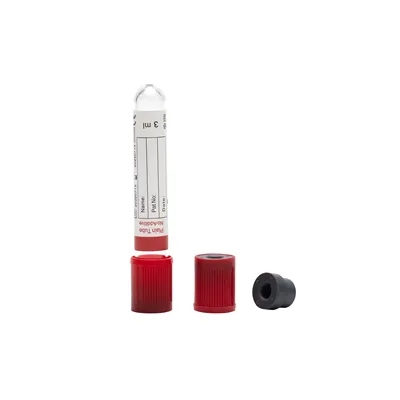
Next, the systems they connect to, which tie directly back to the needle choice. For regular blood collection, the standard is a vacuum tube system: you poke the needle into the vein, then attach a tube that has a vacuum inside. The vacuum pulls the exact amount of blood you need automatically, no guessing. Our disposable needles for this have a safety shield that covers the needle right after you take it off the tube—super important for preventing needlestick injuries, which are a big risk for lab workers. For blood donation, you don’t use vacuum tubes; you use a collection bag that’s made to hold a full unit of blood, plus anticoagulants to keep it from clotting. The needle here connects to a tubing line that leads straight to the bag, so the blood flows from the vein through the needle, through the tubing, into the bag. If you tried to use a regular collection needle with a vacuum system for donation, the vacuum would pull way too fast, and the thin needle might cause the vein to collapse—especially for people with small or fragile veins. That’s a bad look for a blood drive, and it can scare first-time donors away.
Then there’s the safety and regulatory side, which we as suppliers take really seriously. Both types of needles have to meet strict FDA (or international) standards, but the requirements are different because the end use is different. Regular collection needles are tested for how well they prevent hemolysis, because a bad sample means a wrong test result, which can lead to a misdiagnosis. Blood donation needles are tested for flow rate and biocompatibility, since the blood is going to be given to another person. A blood donor’s vein is also different from a routine patient’s vein—donors are usually healthy people coming back to give again, so we design the donation needles to cause less bruising and be easier to remove. I’ve had a donor tell me, “The last time I gave blood, my arm didn’t even hurt,” and that makes my team proud, because we engineered that into the needle’s design.
Wait, another big difference: the volume and pressure on the vein. Regular blood collection only pulls a tiny amount, so the vein doesn’t have to work hard. Blood donation pulls almost 100 times more blood, so the needle has to handle higher flow pressure. If a regular needle’s wall is too thin, the pressure of the blood rushing through might make the needle bend or break inside the arm. Our donation needles have thicker needle shafts to handle that pressure, which is non-negotiable. I remember a few years ago, a small clinic tried to use a 16-gauge donation needle for routine blood work because they thought thicker was better. Half their samples came back hemolyzed, and they had to switch back to our 22-gauge needles. That’s a common mistake—people assume thicker is stronger, but for small samples, it’s just not necessary and causes more problems.
Donor experience is another angle that separates the two. When you go to a lab for blood work, you might be nervous, but the process is quick. Blood donation is a more involved process, so comfort is key to keeping donors coming back. The donation needles we supply have a softer, more flexible tubing line after the needle, which is more comfortable to rest on your arm for 10 minutes than the rigid tube you use in a clinic. Also, the insertion angle is different: clinic needles are inserted at a 15-degree angle to get just under the skin, while donation needles are inserted at a steeper angle, almost 30 degrees, because of their thicker gauge. That steep angle helps the needle go straight into the vein without wandering, which makes the donation process smoother.
Let’s talk about contamination too, since we supply disposable needles, so sterility is everything. Both needles are single-use, of course, but the packaging is different. Regular collection needles are usually smaller, with a plastic blister pack that’s easy to open for a lab tech who’s juggling a dozen tubes. Blood donation needles are larger, with a bigger pack that includes the attached tubing, so you don’t have to connect a needle to tubing on-site, which reduces the chance of contamination. I’ve been to blood drives where a phlebotomist tried to connect a needle and tubing themselves, and they nicked the tubing, wasting a bag of blood. Our pre-assembled donation needles eliminate that step, which saves time and reduces waste.
One thing I want to make clear: I’m not saying one is better than the other. They’re designed for different jobs, just like a wrench and a screwdriver. If you use a screwdriver to turn a bolt, it’s not going to work, and you might strip the screw. Same with these needles. For anyone ordering these supplies—whether you’re a lab manager, a blood bank coordinator, or a clinic director—it’s important to match the needle to the procedure. Using the wrong one can lead to bad samples, patient discomfort, vein damage, even safety risks.
As someone who’s worked with these needles every day, I’ve seen the impact of getting this right. A good needle makes a lab tech’s job easier, makes a donor feel comfortable enough to come back, and ensures that blood products are safe for patients who need them. If you’re out there ordering disposable venous blood collection needles, or if you have questions about which type is right for your facility, I’m here to help. We work with clinics, blood banks, and labs of all sizes, so we can find the right solution for your needs. Feel free to reach out to our team to discuss your requirements, ask about our product lines, or get samples. We’re happy to help you make sure you have the right tool for every job, from routine blood tests to life-saving blood donations.
Disposable Venous Blood Collection Needle References
- Centers for Disease Control and Prevention (CDC). "Blood Collection Safety Guidelines for Clinical Settings." 2022.
- International Organization for Standardization (ISO). "Medical Devices – Venous Blood Collection Needles." ISO 10079:2021.
- American Red Cross. "Blood Donation vs. Routine Blood Collection: Key Differences in Equipment and Protocols." 2023.
- World Health Organization (WHO). "Quality and Safety of Blood, Components, and Cellular Therapies." 2020.
- Occupational Safety and Health Administration (OSHA). "Needlestick Prevention in Healthcare Settings." 2021.
Shandong Chengwu Medical Products Factory
As one of the most professional disposable venous blood collection needle manufacturers in China, we offer a wide range of products with superior quality. Please feel free to wholesale bulk disposable venous blood collection needle for sale here from our factory. For more information, contact us now.
Address: Southern End Of Quancheng Road, Chengwu County, Shandong Province, China
E-mail: contact@chengwumedical.com
WebSite: https://www.cwyymed.com/
