Hey there, if you’ve ever walked through a bustling manufacturing plant—maybe you’ve heard the clank of assembly lines before you even turn the corner, smelled the grease and fresh metal, or watched a machine pull a part off a press so fast it’s almost a blur—you’ve probably wondered how everything stays on track, no matter how many parts are being made or how tight the deadlines are. For me, that question’s not just something I think about at trade shows or while waiting for a client call—it’s the core of what I do every single day. I run an industrial model supply company, and let me tell you, these models aren’t the little plastic kits you built as a kid. They’re the unsung heroes that keep manufacturing from turning into a chaotic, costly mess. Today, I want to break down how they actually pull that off, no stuffy jargon, just real talk about what works on the plant floor. Industrial Model

First off, let’s get one thing straight: industrial models aren’t one-size-fits-all. I see way too many people (even some older plant managers who’ve been in the game for 20+ years) lump them all together as “just schematics or 3D prints.” Nah, man—they’re tailored to exactly what a factory needs right now, whether that’s testing a new machine setup, training new hires, or fixing a part that keeps breaking mid-production. Let’s start with the biggest pain point most factories deal with: cutting down downtime. I’ve had a client reach out to me last month screaming because their injection molding machine—one they’d had for 12 years—kept warping plastic parts right when they were ramping up a big order for a toy company. The thing is, they’d tried adjusting the temperature and pressure, but every tweak made something else go wrong. So we built a custom industrial model that matched their exact machine, the specific plastic resin they were using, and even the ambient humidity in their shop that week. We ran 40 simulations on it over two days, and found that the warping was happening because the cooling line was positioned 2mm too far from the part’s thickest edge—something their engineers couldn’t pick up with just blueprints. They adjusted the line, and the downtime dropped from 8 hours a day to 45 minutes, max. That’s the magic right there: models let you test fixes without shutting down your actual line for days, losing money on every part that’s not getting made.
Another huge win? Training new workers. Let’s be real—spending $100k+ on a new robot arm or a robotic welder is a big deal, and you can’t just let a new hire fumble with it on the real line while your high-stakes order is running. That’s where our training models come in. I had a client making car parts a few years back who was hiring 20 new welders at once to keep up with a contract with a major automaker. Their old training setup was just a video on a screen and a old, beat-up welder that was only used for teaching—so half the new hires would mess up their first weld on the actual line, wasting expensive metal and throwing off production. We built a scale model of their exact welding cell, with the same robot, the same metal sheets, and even the same welding parameters. The new hires could practice on it as much as they wanted, mess up hundreds of times, and not cost the company a dime. By the time they moved to the real line, their mistake rate dropped by 70%. It’s way more effective than staring at a diagram, and way cheaper than scrapping parts because of a new team’s learning curve.
Wait, let’s not sleep on scaling up production, either. A lot of factories hit a wall when they want to make more of a product—they assume adding another line is the only way, but that’s not always true. Let’s say you make kitchen knives, and you want to go from 1,000 a week to 3,000 a week. If you just add a second assembly line without testing, you might find that your edge-grinding machine can’t keep up, or the packaging station backs up because it’s not designed for 3x the volume. Our industrial models let you adjust every part of the process—from how the metal blanks move to how the final product gets boxed—without touching your actual shop. We worked with a cutlery company last year that did exactly that: they wanted to scale, so we built a model of their entire line, added a second shift’s worth of workstations, and ran simulations to see where the bottlenecks would be. Turns out, their packaging station was the hold-up, not the grinding one. They reallocated one worker from grinding to packaging, and were able to hit 3,000 units a week without adding a single new machine. That’s the kind of smart scaling that saves companies hundreds of thousands of dollars in upfront costs, not to mention the headache of rearranging a whole shop on the fly.
But here’s the thing I wish more people knew: industrial models aren’t just for big plants with million-dollar budgets. I work with small- to mid-sized manufacturers too—you know, the ones with 20-50 employees, not 500. They used to tell me, “That model stuff’s just for big corporations, we can’t afford it.” But I’ve got clients who run parts shops out of a 10,000 sq ft garage that now use our models to test when their CNC machines will break, or adjust their workflow to handle a last-minute order. Last quarter, a small aerospace parts maker hit me up because they had to rework a $50k part because a tool snapped mid-cut. We built a tiny, scaled model of their CNC setup, and found that the tool path was generating too much vibration. They changed the path, and haven’t had a tool snap in six months. For them, that model cost less than the price of one reworked part. It’s not a luxury—it’s a tool that levels the playing field between big factories and small ones that don’t have a team of 10 engineers on staff.
Now, I know what some of you are thinking: “This sounds cool, but isn’t this all just 3D printing? Or fancy software?” Nope—don’t get me wrong, we use 3D printing and simulation software, but the model is way more than that. Software can give you numbers, but a physical industrial model lets you hold it, move parts around, see how everything fits together, even run tests with real materials if you need to. For example, if you’re testing a new plastic resin that’s stronger but more brittle, a 3D model on a screen can tell you its tensile strength, but a physical model lets you drop it, bend it, see exactly where it might crack under pressure. That’s the part software can’t fully replicate—it’s tangible, so you don’t have to take anyone’s word for the numbers.
I’ll also be real with you: there are mistakes you can make with models. I’ve seen factories go with a cheap, off-the-shelf model that doesn’t match their actual setup, and it ends up being worthless. Or they try to build a model themselves with free 3D software, and it’s missing tiny details—like the way their conveyor belt has a slight dip, or how their machine’s control panel is positioned a little off—that make all the difference. That’s why I always tell clients: the best industrial models are the ones built specifically for your process, not something generic. We don’t just send over a model and say “good luck” — we work with your team, show up to your shop, take measurements, talk to the guys who run the machines every day, because they’re the ones who know the small, weird details that make a model actually useful.
Let’s wrap this up with a recent example that drives this home. A client who makes agricultural equipment (think tractor parts and hay balers) came to us six months ago because their new part for a John Deere baler kept failing in field tests. They’d tested it in their shop, it worked great, but out on a farm, it would crack after a few days of use. We built a model of the part, the machine it fit into, and even simulated the rough farm terrain it would be used on. Turns out, the part’s thickness was perfect for their controlled shop, but on a bumpy field, it was being twisted at angles they didn’t account for. We tweaked the model to add a small reinforcement rib, and the field tests now last three weeks with zero cracks. For them, that’s not just about fixing a part—it’s about keeping their customers happy, and not losing a $200k contract because of a small design flaw.
At the end of the day, manufacturing is all about two things: making parts that work, and making them without wasting time or money. Industrial models aren’t some futuristic tech from a sci-fi movie—they’re the practical tool that makes both of those things possible, whether you’re a 20-person shop or a 500-person plant.
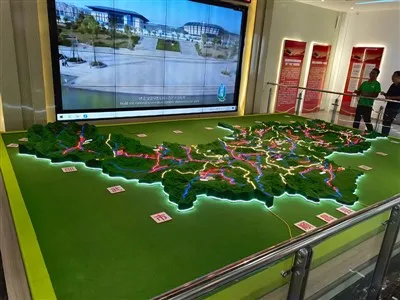
If you’ve got a problem with downtime, need to train a new team, want to scale production, or just can’t figure out why a part keeps failing, we can build a custom industrial model that works for you. No one-size-fits-all, no generic jargon, just people who get manufacturing and models that actually make your line run smoother. Hit us up to talk through what you need—let’s figure it out together.
Scale Model References:
- Industry Week. (2022). "How Digital Twins and Physical Models Reduce Manufacturing Downtime." Retrieved from manufacturing industry research reports
- Society of Manufacturing Engineers. (2021). "The Role of Physical Prototyping in Modern Manufacturing Training Programs." SME Technical Report
- McKinsey & Company. (2023). "Scaling Small: How Mid-Sized Manufacturers Use Modeling to Compete with Large Corporations." Global Manufacturing Insights Series
- Journal of Manufacturing Systems. (2022). "Vibration Testing in Physical Industrial Models: Closing the Gap Between Simulation and Real-World Performance." Volume 64, Issue 2
Guangzhou Zonco Culture and Media Co., Ltd.
Guangzhou Zonco Culture and Media Co., Ltd. is one of the most reliable industrial model manufacturers and suppliers in China, also supports customized service with low price. We warmly welcome you to wholesale cheap industrial model from our factory. For quotation, contact us now.
Address: Room C371, 402, Building 6, No.3 Xintang Street, Tianhe District, Guangzhou
E-mail: 13123180052@163.com
WebSite: https://www.scalemodellab.com/
