If you’ve ever worked with industrial equipment—whether you’re a plant manager, maintenance lead, or someone who’s just had to troubleshoot a finicky piece of process gear—you know that skid mounted systems are total workhorses. They’re pre-assembled on a single steel frame, so they’re way easier to transport and set up than a jumble of individual components. But here’s the thing: even the best skid system can start dragging its feet after a while, leaving you with slow process times, unexpected downtime, and wasted cash. That’s where I come in—for the last 12 years, I’ve run a skid mounted systems supply biz, and I’ve fixed my fair share of underperforming skids (plus helped clients tweak new builds to run smoother out the gate). Today I’m breaking down the real, actionable stuff (no fancy textbook jargon) to get your skid running at peak efficiency. Skid Mounted

First off, let’s get one thing straight: efficiency on a skid isn’t just “running faster”—it’s about squeezing every bit of output out of the system without wasting energy, parts, or time. I’ve seen guys install a brand new skid, fire it up, and call it good… only to realize a week later that their pump is working 20% harder than it needs to because of a bad pipe routing. That’s the avoidable kind of mistake we’re fixing today.
Let’s start with the stuff you do on a regular basis—wait, not just the monthly checklists, the actual smart, targeted maintenance. Most companies do “preventive maintenance” by the book: change the oil every 3 months, check valves weekly. But here’s the tweak I swear by, especially for skids: predictive maintenance paired with component-focused checks. Skids are all connected, so a tiny issue with one part can snowball. For example, I had a food processing client a couple years back whose skid’s centrifugal pump was running hot. Their old techs just oiled the pump and called it done. Turns out, the pump’s suction line was clogged with sediment from a nearby holding tank—so the pump was working harder to pull fluid, wasting energy. When we swapped out the filter in the suction line, the pump’s energy use dropped by 18% almost overnight. The takeaway here? Don’t just check the parts—check the connections between them. Skids have pipes, valves, pumps, and controls all bolted to the same frame, so vibration can loosen fittings and buildup can clog lines. I tell all my clients to do a “deep dive” check every 6 months: flush all suction lines, test valve response times, and use a vibration meter (you can pick up a cheap one for under $100) on motors and pumps. That’s way more effective than just crossing off boxes.
Next up, piping layout and sizing—this is where a lot of first-time skid builders go wrong, and it’s a game-changer for efficiency. I’ve seen skids with pipes that are too small, forcing fluids to move faster, which creates friction loss and makes pumps work overtime. Or pipes that have 90-degree turns at every corner, instead of long-radius elbows that cut down on turbulence. Here’s the rule of thumb I use when building a skid (and what I go back and tweak for existing systems): match pipe size to your flow rate, not the size of the pump. For example, if you have a pump that moves 50 gallons per minute, don’t use a 2-inch pipe—use a 3-inch if it fits the frame. The wider pipe means less friction, so the pump doesn’t have to strain as hard. Also, keep piping as short as possible. I once had a pharmaceutical client whose skid had a 15-foot suction line for their reactor skid. We trimmed it to 8 feet and swapped the four 90-degree elbows for two long-radius ones, and their cycle time dropped by 12%—they could process an extra batch a week without even running the pump longer. It’s little stuff like that that adds up. And don’t forget about insulation! If your skid is handling temperature-sensitive fluids (like chemicals or food products), uninsulated pipes mean you’re wasting energy heating or cooling the fluid mid-process. I always insulate the piping on every skid I build, and for existing systems, it’s one of the cheapest, fastest upgrades you can do.
Now let’s talk controls—most skids come with basic PLCs (programmable logic controllers) or touchscreens, but way too many people just set them and forget them. I’ve been on sites where the control system was set to run the pump at full speed 24/7, even when the process only needed 60% power. That’s a massive waste of energy. Variable frequency drives (VFDs) are your best friend here. VFDs adjust the speed of motors (like pumps or fans) based on real-time demand, so they only use the power they need. For example, if your skid is pumping water to a tank, the VFD can slow the pump down once the tank hits a certain level, instead of it running non-stop. I recommend adding VFDs to any existing skid that doesn’t have them—yes, there’s an upfront cost, but most clients recoup that in 6-12 months from energy savings. Also, tweak the control logic to match your actual process, not the default settings. I had a mining client whose skid’s control system was set to start the solvent pump 10 minutes before the process even began, just to “warm up.” We adjusted it to start the pump 90 seconds before, so it only used energy when it was needed. Small adjustment, big win.
Air handling is another area that’s often overlooked, but critical for skids that use pneumatic tools or air-powered pumps. Leaky air lines are a massive efficiency killer—studies say the average industrial skid loses 20-30% of its compressed air to leaks, which makes your compressor run all the time, wasting energy. The fix? Do a leak audit every quarter. You can listen for hisses, or use a soapy water solution (bubbles mean a leak) on fittings, valves, and hoses. Tighten loose fittings, replace worn hoses, and if you have a really old compressor, it might be worth upgrading to a more efficient model. Also, keep air dryers and filters clean—clogged filters restrict airflow, so your compressor has to work harder. I once helped a fabrication shop fix a skid where compressed air leaks were costing them $1,200 a month in electricity. After fixing the leaks and swapping the filters, that bill dropped to $800. That’s an extra $4,800 a year they could put back into their business, just from fixing something simple.
Wait, let’s not forget about frame and component alignment. Skids are built on steel frames, and over time, vibration from running parts can shift the frame a little, throwing pumps, motors, and couplings out of alignment. Misalignment means parts rub against each other, creating extra friction and wear, which leads to downtime. For example, if a pump and its motor are misaligned, the coupling between them can wear out in months instead of years. I recommend checking alignment every 6 months, or more often if your skid runs 24/7. You can use a laser alignment tool (they’re not as expensive as they sound—around $500) or even a dial indicator, but even a visual check (looking for gaps between the coupling halves) can catch big issues. I had a wastewater treatment client whose skid’s pump and motor were misaligned by just 0.02 inches—small enough that no one noticed, but it was making the pump use 15% more energy. Aligning them fixed that, and the pump’s maintenance frequency dropped too.
Also, don’t sleep on regular filter and strainer changes—they’re cheap, but clogged filters cause all sorts of problems. If your skid has a filter in the suction line, a clogged one restricts flow, making the pump work harder, and can even cause cavitation (when bubbles form in the pump, which damage the impeller and reduce efficiency). I tell all my clients to check filters monthly, or more often if they’re handling dirty fluids like wastewater or process slurries. Strainers for larger debris should be checked every 2 weeks—removing a handful of leaves or metal shavings from a strainer is way cheaper than replacing a $1,000 pump impeller.
Now, here’s a big one specific to skid mounted systems (something general industrial sites don’t have): skids are designed to be modular, so you can upgrade or tweak them without rebuilding the whole thing. A lot of clients think their skid is fixed forever, but if your process changes (like you need to move more fluid, or work with a different chemical), you don’t have to buy a whole new skid. You can add a VFD, swap a pump, or adjust piping to match your new needs. For example, I had a chemical processing client who expanded their production line and needed their existing skid to handle 25% more flow. Instead of buying a new skid for $50,000, we just upsized the pump and adjusted the piping on their current skid for $12,000. That saved them a ton of money, and their skid is now running at the efficiency they needed.
Wait, let’s circle back to something practical—don’t skip the small, day-to-day habits. If your operators are skipping pre-start checks, or letting debris pile up around the skid, that’s going to hurt efficiency. I train all my clients’ operators to do a 5-minute pre-start walkthrough every day: check fluid levels, listen for unusual noises, make sure valves are in the right position, and look for leaks. It sounds basic, but it catches issues before they turn into big, downtime-causing problems. I had a client who skipped this, and a small leak in a valve went unnoticed for 3 months—by the time they found it, the valve was corroded and had damaged the frame, costing them $8,000 in repairs and 2 days of downtime. A 5-minute check every day would have stopped that.
At the end of the day, improving skid efficiency isn’t about overcomplicating things with fancy tech—most of it is smart, regular maintenance, paying attention to the little connections between parts, and tweaking the system to match your actual process, not the default settings. I’ve spent years building and fixing skids, and the biggest wins always come from the stuff that’s easy to overlook, not the big, expensive upgrades.
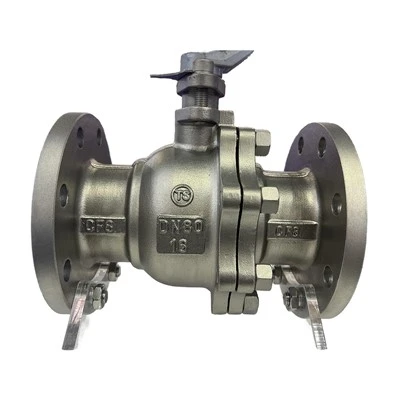
If your skid is running slow, wasting energy, or needing too much maintenance, I can help. I build custom skid mounted systems tailored to your specific process, and also offer retrofits and efficiency tweaks for existing skids. Whether you need a brand new skid, want to upgrade your current one, or just troubleshoot a persistent issue, hit me up to chat—no pressure, just real advice from someone who’s worked with these systems day in and day out.
Butterfly Valve References:
- Industrial Skid Systems: Design, Operation, and Maintenance (2nd Ed.), Process Press, 2021
- Pump Efficiency Best Practices for Industrial Applications, National Fluid Power Association, 2022
- Compressed Air System Efficiency Guide, U.S. Department of Energy, 2020
- Predictive Maintenance for Modular Process Skids, Journal of Industrial Equipment & Maintenance, Vol. 18, No. 2, 2023
Yancheng Suhao Valve Industry Co., Ltd.
We are one of the most experienced skid mounted manufacturers and suppliers in China, specialized in providing high quality customized service. Please feel free to wholesale durable skid mounted in stock here from our factory. Also, quotation is available.
Address: No. 33, Huashan Road, Economic Development Zone, Funing County, Jiangsu Province
E-mail: Support@suhao.net
WebSite: https://www.suhaoind.com/
