If you’ve ever visited coastal workshops, marine maintenance bays, or tropical industrial facilities, you’ve probably noticed how sticky, damp, and unforgiving constant high humidity can be. From rusting metal tools to warping wooden fixtures, moisture wears on nearly every material that isn’t designed to resist it. As a fiberglass fire blanket supplier, I get asked a lot of questions about how our products hold up in these humid environments—most people assume fiberglass, which is already tough, will simply shrug off extra moisture. But the reality is a little more nuanced, and over the past decade I’ve seen first-hand what happens when a fire blanket isn’t designed specifically for high-humidity spaces. Fiberglass Fire Blanket
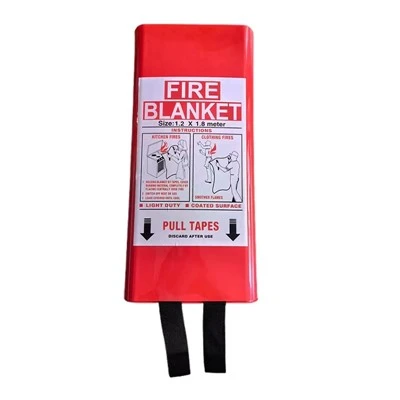
Let’s start with the basics to set the stage. A fiberglass fire blanket works by smothering small fires (like those from welding sparks, electrical short circuits, or cooking grease) by cutting off their oxygen supply. It’s made from woven or bonded fiberglass strands, sometimes treated with a heat-resistant coating to boost performance. Unlike fire blankets made from wool or other natural fibers, fiberglass is inorganic, so it doesn’t burn. But inorganic doesn’t mean immune to moisture-related issues—especially when humidity climbs above 60% or stays consistently high, which is standard in places like Southeast Asian shipyards, Caribbean boat repair shops, or even indoor welding bays in regions with heavy monsoon seasons.
The first thing most people worry about in high humidity is mold. Wait—fiberglass doesn’t grow mold, right? That’s a common misconception, and it’s partially true, but not entirely. Mold needs three things to thrive: moisture, organic food source, and warm temperatures. Pure fiberglass strands themselves are inorganic, so they don’t provide food for mold. But here’s the catch: many fiberglass fire blankets have a secondary component—like a binding agent, a heat-resistant coating, or even a small amount of natural fiber used to strengthen the weave. That binding agent is usually an organic polymer, designed to keep the fiberglass strands from fraying during use and storage. In high humidity, that binding agent absorbs moisture over time, creating a damp, slightly organic surface that mold spores (even tiny, airborne ones that are always present in the air) can latch onto.
I learned this lesson the hard way about seven years ago. A client in Singapore reached out to me frustrated—they’d purchased a bulk order of a general-purpose fiberglass fire blanket from another supplier to use in their ship’s engine room, which has a constant humidity of 75% year-round. Within six months, half the blankets were covered in a thin black and green fuzzy film. When they tested one for fire performance, it failed: the coating had bubbled and peeled off, the binding agent had weakened so much that strands were falling apart, and the blanket couldn’t withstand the temperatures it was designed for. The supplier they’d bought from didn’t market their blankets for high-humidity use, and that’s the mistake.
Not all moisture-related issues are as visible as mold, though. There’s also something called hydrolytic degradation, which is a fancy way of saying “chemical breakdown from water.” The binding agents and coatings used in fiberglass fire blankets are formulated to resist heat, but not all resist moisture equally. For example, a standard silicone coating on a fire blanket works great in dry, moderate temperatures, but in high humidity, the silicone can absorb tiny amounts of water over repeated cycles of wetness and drying. Over time, this causes the silicone to crack or flake, which leaves the underlying fiberglass weave exposed. When that happens, the blanket’s ability to withstand direct heat drops sharply—exactly the opposite of what you want in an emergency.
Another factor is dust and debris buildup, which is amplified in humid environments. When the air is damp, tiny particles (metal shavings from welding, wood dust, even fabric lint) stick to the surface of the fire blanket instead of falling off. Those particles can be abrasive, so when you grab the blanket to use it, the trapped debris grinds against the fiberglass strands, causing tears and fraying. In dry conditions, you can just shake the blanket out, but in high humidity, moisture glues the debris in place, making it harder to clean and maintain.
But here’s the good news: not all fiberglass fire blankets are the same. Over the past several years, our team has invested in testing and re-formulating our products specifically for high-humidity environments, and we’ve refined the design to address these exact issues. First, we use a modified binding agent that’s specially engineered to repel moisture—instead of an organic polymer that absorbs water, we use a hydrophobic synthetic binder that forms a barrier over the fiberglass strands. This binder doesn’t break down in high humidity, and it prevents mold spores from finding a food source on the blanket’s surface. We also use a ceramic-based coating instead of standard silicone; ceramic is inorganic, so it doesn’t absorb water, and it’s far more resistant to temperature fluctuations, even after months of exposure to damp air.
We’ve also adjusted the weave of the fiberglass strands. In humid spaces, a tight, dense weave can trap moisture inside the blanket, so we use a balanced, open weave that allows air to circulate through the material. That airflow prevents moisture from getting stuck between the strands and reduces the chance of mold or mildew growth. We’ve tested this design in a controlled environmental chamber that simulates 80% humidity, with temperatures cycling between 20 and 35 degrees Celsius—conditions far harsher than most tropical industrial spaces. After 1,000 hours of testing (that’s more than 40 days of continuous exposure), our high-humidity fire blankets showed zero signs of mold, and their heat resistance was still at 95% of the original rating.
I know these numbers matter to our clients, but what they don’t show is the real-world impact. Last year, we supplied fire blankets to a boat repair yard in Miami, where the humidity hovers around 70% most of the year. The yard’s owner told me that before switching to our high-humidity line, they were replacing their fire blankets every three to four months because of mold and fraying. Now, they’ve been using our blankets for 18 months, and none have needed replacement for moisture-related issues. That’s the difference between a one-size-fits-all fire blanket and one designed for the conditions where it’s actually going to be used.
Of course, even the best-designed fiberglass fire blanket isn’t invincible. High humidity can create other issues unrelated to the blanket itself—for example, if the blanket is stored in a closed, damp cabinet, air can’t circulate, and even our moisture-resistant binders might be challenged. That’s why we always include simple care instructions for high-humidity environments: store blankets in well-ventilated areas, avoid stacking heavy items on top of them, and if they do get wet (from a spill or fire suppression system), hang them to dry completely before storing them away. It’s a small step, but it makes a big difference in extending the life of the blanket.
I’ve also had clients ask me if fiberglass fire blankets are the right choice at all in high-humidity spaces, given the moisture risks. The answer is almost always yes—there’s no better portable, cost-effective fire suppression tool for small, immediate fires, especially in industrial or marine settings where water-based suppression systems might damage sensitive equipment. The key is choosing a fire blanket that’s been tested and formulated for high humidity, not just any fiberglass blanket off the shelf.
Over my years as a supplier, I’ve learned that the best products aren’t just about being tough in lab tests—they’re about being tough in the real environments where people actually use them. A fire blanket that works perfectly in a dry, air-conditioned workshop is useless if it molds and falls apart in a ship’s engine room or a tropical welding bay. That’s why we spent so much time researching and testing our high-humidity line, because we’ve seen firsthand the cost of choosing the wrong product.

If you work in a space with constant high humidity—whether that’s a coastal repair shop, a tropical manufacturing facility, a marine vessel, or even a commercial kitchen in a humid climate—and you need reliable fire suppression tools, I’d encourage you to reach out to our team for more information. We can share our test data, talk about the specific needs of your space, and help you choose the right fiberglass fire blankets that will perform when you need them most. Don’t wait until a small fire turns into a big problem because your fire protection tools failed due to something as simple as humidity.
Emergency Light References
ASTM International. (2018). Standard Test Method for Measuring the Combustion Characteristics of Textile Materials. ASTM D751.
National Fire Protection Association. (2020). Standard on Portable Fire Extinguishers and Fire Blankets. NFPA 10.
Krishnan, S., & Padmanabhan, M. (2021). Hydrolytic Degradation of Polymer Binders in Fiberglass Composites Under High Humidity Conditions. Journal of Industrial Textiles, 50(7), 1023-1041.
International Organization for Standardization. (2019). Fire Blankets for Use in Domestic, Commercial and Industrial Premises. ISO 11613.
Shaoxing Weimin Fire Fighting Equipment Co., Ltd.
Shaoxing Weimin Fire Fighting Equipment Co., Ltd. is one of the most professional fiberglass fire blanket manufacturers and suppliers in China, also supports customized service with low price. Welcome to buy discount fiberglass fire blanket in stock here and get quotation from our factory. 5 years warranty is available.
Address: CHINA
E-mail: info@weiminfire.com
WebSite: https://www.weiminfire.com/
