Hey there! As a filter paper supplier, I often get asked about how to clean filter paper if it’s possible. Well, today I’m gonna break that down for you. Filter Paper
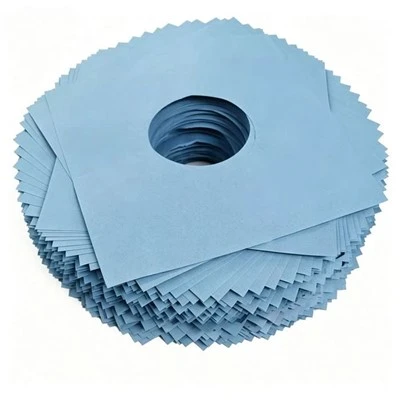
First things first, not all filter papers can be cleaned. It really depends on the type of filter paper and what it’s been used for. There are different kinds of filter papers out there – qualitative filter papers, quantitative filter papers, and specialty filter papers. Each of these has its own characteristics and uses, and that affects whether cleaning is a good idea.
Let’s start with qualitative filter papers. These are usually used for general filtration in things like chemistry labs for separating solids from liquids. If the filtration was just for something like separating sand from water, and the filter paper isn’t too clogged or damaged, there’s a chance you can clean it.
The first step in cleaning qualitative filter paper is to gently remove any large particles. You can do this by tapping the filter paper over a waste container. Be careful not to be too rough, or you might tear the paper. After that, you can soak the filter paper in a mild detergent solution. I usually recommend using a dish – soap solution that’s about 1 – 2% concentration. Fill a container with water and add a small amount of dish soap, then stir it well.
Let the filter paper soak in this solution for about 15 – 20 minutes. This will help to loosen up any remaining dirt or debris. While it’s soaking, you can gently agitate the solution every few minutes. This will help the detergent do its job better.
After soaking, take the filter paper out and rinse it thoroughly under running water. Make sure to rinse both sides of the paper. You want to get rid of all the detergent and any remaining particles. If you still see some stubborn stains or particles, you can use a soft – bristled brush to gently scrub the paper. But again, be really gentle so you don’t tear the paper.
Once you’ve rinsed it well, lay the filter paper flat on a clean towel to dry. Don’t wring it out, because that can damage the paper’s structure. Let it dry naturally. It might take a few hours, depending on the humidity in the air.
Now, quantitative filter papers are a bit more delicate. These are often used in more precise analytical work, where the purity of the sample is crucial. Cleaning quantitative filter papers is a riskier business. If they’ve been used to filter out very fine particles or in a chemical reaction where there could be residues that are hard to remove, it’s probably not worth trying to clean them.
But if the filtration was relatively clean, and you really need to reuse them, you can follow a similar process as for qualitative filter papers. However, you might want to use a more specialized cleaning agent, like an appropriate buffer solution. This can help to maintain the chemical properties of the filter paper.
Specialty filter papers are another story. These are designed for very specific applications, like filtering out certain types of microorganisms or for use in high – temperature environments. Cleaning specialty filter papers can be extremely tricky, and in most cases, it’s not recommended. The special coatings or treatments on these papers can be easily damaged during the cleaning process, which will affect their performance.
For example, if you have a filter paper with a hydrophobic coating that’s used to separate water from oil, cleaning it might remove the coating. This would make the filter paper useless for its intended purpose. So, before you even think about cleaning a specialty filter paper, check with the manufacturer or do some research to see if it’s possible.
There are also some factors you need to consider when deciding whether to clean filter paper. One is cost – benefit. If the filter paper is relatively cheap, it might be more cost – effective to just replace it rather than spending time and money on cleaning. Another factor is the time it takes. Cleaning filter paper can be a time – consuming process, especially if you have a lot of them to clean.
If the filter paper has been used in a situation where there’s a risk of contamination, like in a medical or biological application, it’s usually not a good idea to clean it. Reusing a contaminated filter paper can lead to inaccurate results or even spread of harmful substances.
So, as you can see, cleaning filter paper can be a viable option in some cases, but it’s not always the best choice. It depends on the type of filter paper, what it’s been used for, and the resources you have.

If you’re in the market for filter papers, whether it’s for your lab, industrial process, or any other application, I’m here to help. I’ve got a wide range of high – quality filter papers to meet your needs. And if you have any questions about using or cleaning our filter papers, don’t hesitate to reach out. Just contact me, and we can have a chat about your requirements and how we can make sure you get the best out of our products. Whether you’re a small – scale lab or a large – scale industrial facility, we can work together to find the right filter paper solutions for you. So, let’s start that conversation and see how we can help you with your filtration needs.
Wool Paper References:
- General knowledge of filter paper properties and usage from years in the industry
- Standard laboratory practices for filter paper handling and cleaning
Shanghai Rongying Industrial Co., Ltd.
As one of the most professional filter paper manufacturers and suppliers in China, we’re featured by quality products and good price. Please rest assured to wholesale customized filter paper from our factory. If you have any enquiry about quotation and free sample, please feel free to email us.
Address: Jiahua Business Center C building 204 room, No.808 Hongqiao Road,Xuhui District,Shanghai,China
E-mail: info@shryspecialtypaper.com
WebSite: https://www.woolpaper.com/
