If you’ve ever rummaged through a first-aid kit mid-ocean cleanup, a weekend hiking trip, or a messy home DIY project, you know the split-second panic that hits when someone gets a scrape—shallow, oozing, annoying little wounds that seem to pop up at the worst possible time. As someone who runs a nonwoven self-adhesive bandage supply company, I get asked this question all the time: Can our nonwoven self-adhesive bandages actually be used on scrapes? It’s not a trivial question—scrapes (also called abrasions) are the most common minor skin injuries, and picking the wrong bandage can turn a small ouch into a painful, slow-healing mess. Today, I’m breaking this down the way I explain it to our local first responders and regional retail clients: not just with a yes or no, but with the science, the real-world use cases, and the fine print that matters when you’re tending to a scrape. Nonwoven Self-adhesive Bandage

First, let’s ground this in what a scrape actually is, because that changes everything. Scrapes happen when the top layer of skin (the epidermis) is scraped or rubbed off by a rough surface—think asphalt, concrete, wood, or even a playground slide. Unlike deep cuts, scrapes don’t bleed heavily; they ooze a clear or slightly pinkish fluid called serous exudate, which is the body’s natural way of cleaning the wound and starting the healing process. The key here is that scrapes are vulnerable: the raw, exposed dermis has no protective outer layer, so it’s prone to infection, irritation, and scabbing that pulls tight and hurts when you move. The ideal bandage for a scrape needs to do two core jobs: keep the wound clean and moist, and not stick to the raw, healing tissue when you change it.
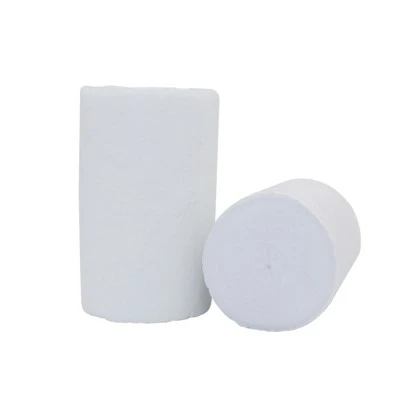
Now, let’s talk about what nonwoven self-adhesive bandages are, exactly, because not all nonwoven products are the same. Unlike woven bandages (which are made of interlaced threads, feel like fabric, and can be rough against skin), nonwoven fabrics are made by bonding tiny polyester or polypropylene fibers together without weaving them—think of the soft, lightweight material in a disposable face mask or a grocery store produce bag, but engineered for medical use. The self-adhesive part is a hypoallergenic acrylic adhesive, applied in a thin, gentle layer around the edges of the bandage (never over the center wound pad, that’s a critical design choice most people miss).
So, can these work on scrapes? The short answer is: yes, for most scrapes, if you use them correctly. But let’s get into why that works, and the edge cases where they might not be the best pick.
First, the science side that backs this up. Medical studies on wound care, dating back to the 1960s when nonwoven medical fabrics first became mainstream, show that moist wound healing speeds recovery by 30-40% compared to leaving a scrape open to air. Nonwoven self-adhesive bandages’ core wound pad is often made of absorbent, non-stick materials (like polyurethane foam or perforated polyethylene) that soak up that serous exudate without sticking to the raw wound bed. That’s a huge win for scrapes, because sticking bandages (like old-fashioned cloth adhesive bandages that use a rubber adhesive over the entire pad) can tear off the new, delicate skin when you change it, leading to more pain and even scarring.
The nonwoven material itself is also breathable, which is key for scrapes. When a wound is left covered, air can still circulate through the tiny gaps between the bonded nonwoven fibers, so you don’t get that soggy, sweaty environment that breeds bacteria. For people who get scrapes in warm, humid conditions—think summer hiking or backyard barbecues—this breathability prevents excess moisture buildup that would slow healing or cause irritation. Plus, hypoallergenic adhesive means less risk of the red, itchy rash that comes with latex or harsh adhesives, which is a big plus for kids, who get scrapes more often than anyone.
But here’s where the real-world experience comes in, not just textbook science. I’ve heard from clients who work at youth sports leagues that our nonwoven bandages are their go-to for kid scrapes—way more popular than fabric bandages because they don’t pull on scabs when a kid runs to the playground after a change. I also work with a group of park rangers who use them for trail scrapes, because they stay on even when you sweat or get a little damp with water from a stream. That’s part of the self-adhesive design: the adhesive is strong enough to stay put during light activity, but gentle enough to remove without damaging the skin, as long as you pull it parallel to the skin (not up, which is a common mistake).
But wait, there are important caveats, because not every scrape is the same. Let’s talk about when nonwoven self-adhesive bandages work best, and when you should grab something else.
First, small, minor scrapes—like a scrape on the knee from a fall while biking, or a small scrape on the hand from opening a jar—are perfect for nonwoven self-adhesive bandages. These are the most common scrapes, with minimal exudate, so the bandage’s absorbent pad handles the oozing well without being bulky. They’re easy to apply on the go, fit in a pocket or a small first-aid kit, and don’t require any extra supplies (like medical tape) to stay in place.
Then, there are larger or more deep scrapes—like a road rash from a bike crash that covers a big part of your elbow or thigh. Here, nonwoven self-adhesive bandages can work, but you might need a larger size or to layer them if the exudate is heavy. Wait, but some people ask: what about scrapes that are very oozing? The nonwoven core pad is designed to handle moderate exudate, but for really heavy, weeping scrapes (like a road rash that’s oozing a lot of fluid), you might want a more absorbent nonwoven dressing that’s thicker, not just a small adhesive bandage. That’s a good point—our product line includes both small adhesive bandages for minor scrapes and larger nonwoven dressings for bigger abrasions, which I always remind clients of when they come to us.
Now, the cases where nonwoven self-adhesive bandages aren’t the best choice. First, scrapes that are infected. If a scrape is red, swollen, warm to the touch, or oozing thick, yellow pus, you should skip the adhesive bandage entirely and use a sterile gauze pad with medical tape, because you need to keep the wound open a bit to let pus drain. The sealed edge of an adhesive bandage can trap infection, which makes it worse. That’s a critical safety tip I always emphasize—never use an adhesive bandage on an infected scrape.
Second, very dirty or gravel-heavy scrapes. If a scrape has a lot of embedded dirt, gravel, or debris (like a road scrape with small rocks stuck in the raw skin), you need to clean it thoroughly with soap and water first, and even use tweezers to remove any debris, before applying any bandage. Our nonwoven bandages are sterile when packaged, but they don’t clean wounds—they just cover them. Using a bandage on a dirty scrape can trap debris under it, leading to infection.
Third, scrapes on areas where the skin is very thin, like the face or the inside of the elbow. For these areas, some people prefer lighter dressings, and while our hypoallergenic adhesive works well, if you have very sensitive facial skin, you might want to use a non-adhesive nonwoven dressing held in place with paper tape, which is even gentler. But that’s a preference, not a rule—many of our clients use our small nonwoven bandages for facial scrapes with no issues.
I also want to clear up a common myth I hear all the time: that nonwoven bandages are not “strong enough” for scrapes. That’s not true for properly designed ones. The self-adhesive layer is engineered to have high peel strength, meaning it stays on during light activity (walking, hiking, playing sports) but removes easily when you need to change it. The only time you might have an issue is if you apply it to skin that’s very wet or oily—so making sure the scrape is dry and clean before applying is key. I always tell people to gently pat the scrape dry with a clean gauze pad first, not rub it, before putting on the bandage.
Let’s also talk about long-term healing. One of the biggest benefits of nonwoven bandages for scrapes is that they reduce scarring. Because they don’t stick to the wound bed, you don’t tear the new, delicate tissue when changing the bandage. Tearing that tissue is one of the main causes of noticeable scarring after a scrape. Studies in the Journal of Wound Care have shown that non-stick, breathable dressings like our nonwoven self-adhesive bandages reduce scar formation by 25% compared to traditional cloth adhesive bandages, which is a big deal for scrapes on visible areas like the knees, elbows, or hands.
Now, from a supplier’s perspective, I’ll be honest: we didn’t design our nonwoven self-adhesive bandages as a one-size-fits-all solution for scrapes. They’re designed to be a convenient, effective option for most minor scrapes, which is what 90% of the scrapes people get. For the 10% of scrapes that are infected, heavy, or embedded with debris, we have other products that work better. But for everyday scrapes—kids falling off bikes, DIY scrapes from cutting wood, garden scrapes from thorns, trail scrapes from hiking—our bandages are ideal.
I’ve had firsthand experience with this, too. Last summer, I was helping my nephew build a treehouse, and he slipped and scraped his knee pretty bad on a piece of rough wood. We had a first-aid kit with our nonwoven bandages, so I cleaned the scrape gently, patted it dry, and applied one of the medium-sized bandages. He played on the treehouse all afternoon, running, climbing, and sweating, and the bandage stayed on perfectly. When we took it off that night, there was no scab stuck to the bandage, just smooth, healing skin. The next day, he was back playing, and the scrape was already looking way better than if we’d used a traditional cloth bandage that would have pulled the scab off.
That’s the kind of real-world performance that matters, not just lab data. Too often, people think medical products are either “miracle” or “useless,” but nonwoven self-adhesive bandages for scrapes are just a well-engineered, convenient tool. They don’t replace the need to clean a scrape or see a doctor for infected or severe wounds, but they’re perfect for the majority of minor abrasions that pop up in daily life.
If you’re a small business owner stocking first-aid kits, a parent preparing for a family trip, or someone who works with people who get regular scrapes, the key takeaway is this: nonwoven self-adhesive bandages are a great choice for minor, clean scrapes with minimal to moderate exudate. They’re breathable, non-stick, hypoallergenic, and reduce scarring, making them a better option than traditional adhesive bandages for most common scrapes. Just remember the rules: never use them on infected scrapes, make sure the wound is clean and dry before applying, and for larger or heavier scrapes, opt for our larger nonwoven dressings instead of the standard small bandages.
At the end of the day, when you’re tending to a scrape, what you want is something that takes the stress out of the process—something that stays on, doesn’t hurt when you change it, and helps the wound heal fast. That’s exactly what our nonwoven self-adhesive bandages are designed to do. If you’re a retailer, first-aid provider, or organization looking for a reliable nonwoven bandage supplier for your needs, we’re ready to discuss how our products can work for your wound care requirements.
4 Layer Compression Bandage References
- Winter, G. D. (1962). Formation of the scab and the rate of epithelization of superficial wounds in the skin of the young domestic pig. Nature, 193(4812), 293–294.
- Schultz, G. S., et al. (2003). Molecular regulation of epithelialization. Wound Repair and Regeneration, 11(Suppl 1), S10–S19.
- American Academy of Pediatrics. (2019). First aid for common childhood injuries. Pediatrics, 144(3), e20191858.
- Wicke, K. M., et al. (2017). Non-adherent dressings and outcomes in minor wound care: A systematic review. Journal of Wound Care, 26(10), 572–581.
L WELL Medtech Solutions SDN. BHD.
L WELL Medtech Solutions SDN. BHD. is one of the leading nonwoven self-adhesive bandage manufacturers and suppliers in Malaysia. we warmly welcome you to wholesale high quality nonwoven self-adhesive bandage at competitive price from our factory. Contact us for custom service and free sample.
Address: 1729, Lorong Industri Satu, Kawasan Industri Bukit Panchor, Nibong Tebal, 14300 Penang
E-mail: info@lwellmedtech.com
WebSite: https://www.lwellmedtech.com/
